
我和僵尸有个约会2
US unveils new sanction intended to strangle Iran’s economy as conflict drags on; Tehran vows tough response_我的网站

一 |
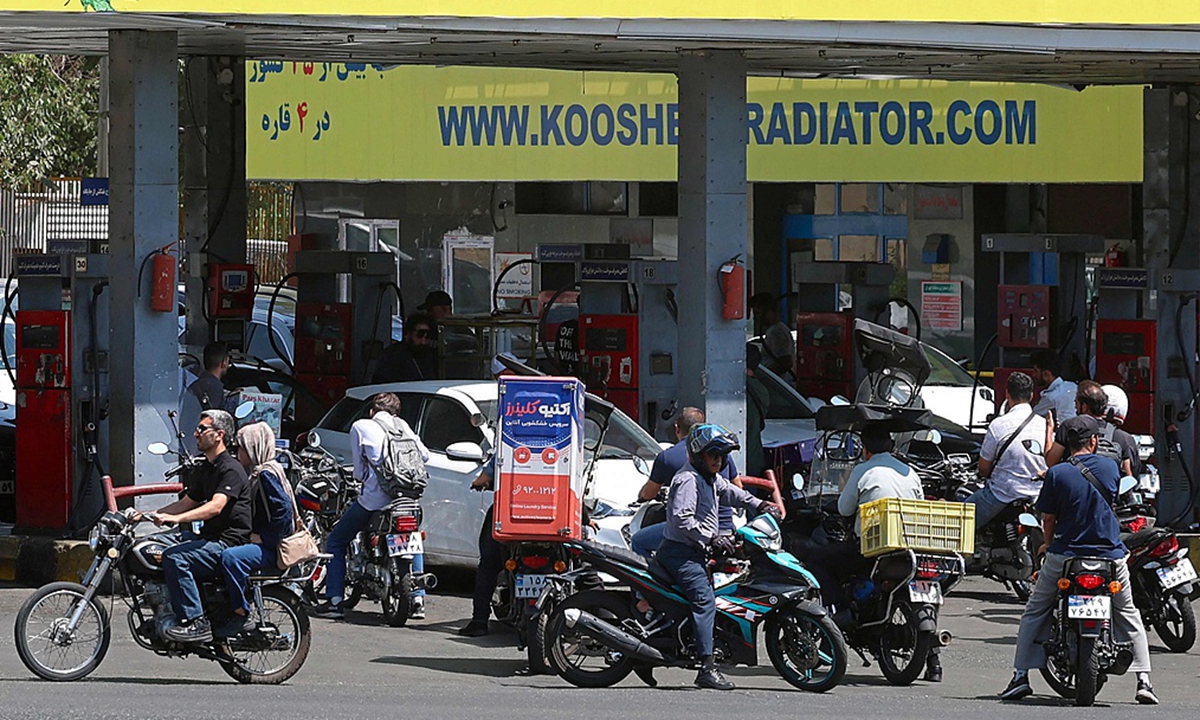
As military strikes and diplomatic negotiations have both failed to bring an early end to the roughly six‑month‑old US-Iran conflict, Washington rolled out new sanctions against Tehran on Monday local time intended to further strangle its economy. Iran, for its part, has vowed a tougher pushback.
In a news conference on Monday, Treasury Secretary Scott Bessent threatened new sanctions on countries refusing to cut economic ties with Iran, following recent rhetoric from Washington threatening an "economic D-Day" for Iran.
Meanwhile, the Office of Foreign Assets Control (OFAC) under the US Treasury announced secondary sanctions on nearly 60 entities, individuals, and vessels in multiple jurisdictions which, according to the US' claims, enable Iran's activities, including so-called nuclear and missile technology procurement, cyber operations, and oil-revenue generation networks.
According to Reuters, those sanctions targeted businesses in China, the UAE, Singapore and several other countries, including a cooking-oil refinery in France, but did not include any of the Chinese financial institutions suspected of facilitating Iran's oil trade.
In response to US Treasury Secretary Scott Bessent laying out plans for economic asphyxiation of Iran, expanding Washington's secondary sanction threats and warning of dire consequences for countries that do not join the campaign, Chinese Foreign Ministry spokesperson Lin Jian said at a press briefing on Tuesday that China has made clear on many occasions its firm opposition to illicit unilateral sanctions that have no basis in international law or the authorization of the UN Security Council.
"Economic warfare and maximum pressure provide no solution. On the contrary, they only serve to fuel tensions and lead to risk spillover, which will disrupt the global economic and financial order, and harm the legitimate rights and interests of other countries," the spokesperson said.
The pressing task is to facilitate the deescalation of the situation and return to dialogue and negotiation as soon as possible, Lin said, adding that China will do everything necessary to firmly safeguard its rights and interests, Lin added. Lin also said China's cooperation with Iran is conducted within the framework of international law, thus should not be disrupted.
When asked whether China has received any such timeline, as the US stated it would give countries a timeline on when to shut down the actions that it has identified, and how China intends to respond to the relevant announcements by the US Treasury involving China-based entities and individuals, Chinese Foreign Ministry spokesperson Lin Jian stated on Tuesday that China is closely following the developments, and will do everything necessary to firmly safeguard our rights and interests.
In May this year, China's Ministry of Commerce issued a blocking ban prohibiting any recognition, enforcement or compliance with US sanctions imposed on five Chinese companies on the grounds of their alleged involvement in Iranian petroleum transactions.
Relying on its financial hegemony and long‑arm jurisdiction, the US enforces unilateral sanctions with no basis in international law. Such measures severely undermine fundamental consensus for international trade and erode the existing international order, Zhou Mi, senior research fellow at the Chinese Academy of International Trade and Economic Cooperation, told the Global Times on Tuesday.
In essence, Washington is imposing its Iran‑focused policies to enterprises across the globe, compelling third‑party actors to fall in line with its diplomatic objectives, Zhou noted.
The latest sanctions would affect a broader range of countries, industries and firms. They will not only draw wider opposition from the international community, but also boomerang on the interests of US‑owned enterprises, he added.
Fewer levers left
"We are launching an economic onslaught against Iran's financial connections around the globe," Bessent claimed at a press conference. "Our objective is to sever every economic lifeline" that sustains the country, he said, according to a Treasury release.
The US Treasury Department said in a release that the new sectoral sanctions determinations target five critical sectors - digital assets, technology, gold, aviation and shipping - that the US claimed Iran has relied on to support its economy.
US Treasury claimed that "any entity that facilitates money laundering or sanctions evasion on behalf of Iran risks being cut off from the US financial system."
OFAC also suspended several general licenses that previously authorized certain remittance payments to Iran and Iranian access to the US cultural and academic system. The office also issued additional guidance on the so-called sanctions risks of bowing to Iranian demands related to shipping in the Strait of Hormuz.
Mohammad Mokhber, an aide to Supreme Leader Mojtaba Khamenei, said in an X post on Monday that Iran's response to US sanctions and pressure will be "more decisive than before."
Iranian Economy Minister Ali Madanizadeh said that Tehran "is and was ready," with a two-year plan to counter Washington's new sanctions. He told state television that "it seems they wished to suffer yet another defeat," per an AFP report.
Iranian Parliament Speaker Mohammad Bagher Ghalibaf responded in an X post that "the Americans know no one will believe their nonsense," noting that the US is not in a position economically to restrict its relations with other countries.
Alan Eyre, a distinguished diplomatic fellow at the Middle East Institute, told NBC News that after six months of combat, the US government "has few remaining levers it can use to convince Iran's major trading partners to materially reduce their economic ties."
While Washington's maximum‑pressure campaign may deliver short‑term shocks to Iran's economy, it can hardly "strangle" the country completely, said Liu Zhongmin, a professor at the Middle East Studies Institute of Shanghai International Studies University.
He added that Iran's economic resilience cannot be underestimated. Having borne decades of crippling sanctions from the US and Western nations, Tehran has built substantial experience in sanction‑busting and developed coping mechanisms ranging from basic‑industry self‑reliance and regional trade networks to oil‑for‑goods swaps and non‑US dollar‑denominated trade. Furthermore, the Strait of Hormuz remains a source of strategic leverage for Iran to push back against US pressure.
The expert said that Tehran and Washington are encountering "a battle of wills," and Iran believes the economic costs the US would suffer from a Hormuz blockade would outweigh the damage inflicted on Iran by sanctions.
Washington's "economic strangulation" policy risks ending in failure unless it yields short‑term outcomes, particularly securing the opening of the Strait of Hormuz, Liu added.
Self-created dilemma
As the US ramps up pressure on Iran, Americans are growing averse to a protracted war.
According to a Reuters/Ipsos poll that closed on Monday, US public approval of the war with Iran fell to its lowest level since the conflict's early days, with just 31 percent of Americans supporting US military action.
On June 18, the US and Iran signed an MoU, under which the two were scheduled to hold negotiations within a period of 60 days, which ended on August 17, to reach a final agreement. However, the talks' fate remains unclear following renewed escalation between the two countries.
Iranian political analyst Mostafa Khoshcheschm told Al Jazeera that the new US sanctions intended to create an "economic onslaught" were a "political show" of intimidation.
Liu said that by resorting to an "economic strangulation" tactic after miring itself in a fruitless military quagmire over Iran, the US has laid bare its practical predicament and strategic dilemma, and seemingly running out of cards.
Citing sources, CNN reported earlier this month that the US military has exhausted nearly 80 percent of its interceptors for a key missile defense system as senior US military commanders are warning that the Pentagon's munitions stockpile is "dangerously low."
Faced with depleted ammunition stockpiles and insufficient military‑industrial capacity, and amid growing domestic criticism of its Middle East policy, the White House has opted for tough economic measures against Iran, Liu said. "Less costly than military coercion, such moves help Washington strike a tough posture before voters and shun political risks from further military escalation," said the expert.
There is, however, an increasingly obvious paradox in Washington's economic warfare against Iran: the tighter the sanctions, the tighter global energy supplies become, and the higher costs borne by American consumers and businesses, the expert added.
。

二 |
Employers added 177,00 jobs in August as the leisure and hospitality sector pulled back sharply from its recent hiring surge, private payroll firm ADP reported on Wednesday.
The number was below estimates of 195,000 and down from the 324,000 reported in July.
"This month's numbers are consistent with the pace of job creation before the pandemic," said Nela Richardson, chief economist, ADP. "After two years of exceptional gains tied to the recovery, we're moving toward more sustainable growth in pay and employment as the economic effects of the pandemic recede."
The hospitality industry cooled significantly, adding only 30,000 jobs. Education and health services, laggards during the pandemic, added 52,000 while employment in trade, transportation and utilities increased by 45,000.
Wages, meanwhile, rose at an annual rate of 5.9%, the slowest pace since September of 2021.
On Tuesday, in another sign of the labor market cooling, the number of job openings fell to 8.8 million as of the end of July. The number is the lowest since early 2021.
“The labor market is cooling and is taking pressure off policy makers concerned with a second wave of inflation,” said Jeffrey Roach, chief economist at LPL Financial. “Businesses should get some respite as inflation decelerates and the risk of quiet quitting dissipates.”
Meanwhile, the second estimate of gross domestic product came in slightly down to 2.1% on Wednesday from the prior 2.4% annual number based on a decline in exports. That is above the 2% rate seen in the first quarter but well below current estimates of economic growth in the third quarter that are now running at 5.9%.
That is a number that will likely come down as the weeks go by and more fresh data comes in, but it is one that will likely cause some concern at the Federal Reserve as it looks for an economic slowdown to help bring inflation down to the central bank’s 2% annual target.
The Fed meets in late September to consider interest rate policy with most analysts expecting no change, although there is an expectation the Fed could lift rates again in November if the economic data remains too strong.
One key data point will be the jobs report for August, due out on Friday with expectations of a gain of 169,000 jobs in the month.
“It looks like the economy is accelerating,” says Steve Wyett, chief investment strategist at BOK Financial. “Second quarter earnings were down, but not by as much as expected.”
Still, Wyett says the record levels of consumer indebtedness could eventually lead to a pullback.
“I’m a little worried about the consumer,” he says.
。Current article:http://www.bainangmieruopanglaomen.sbs/osvt2/20260826/4028.html
Published on:12:30:12
我的网站最新文章
- 极氪009西湖泡俩小时全程没断电没下沉:车主顺利开窗逃生
- A股关键节点 券商股“倍量”异动!有何深意?
- 杜加里:小蜘蛛闹转会的方式极为愚蠢,未吸取格列兹曼的前车之鉴
- 情暖八一 微光送爱——九江、景德镇两地开展“微光行动”慰问退役军人
- 外交部:美方尚未就攻击西工大作实质性回应
- 国台办驳斥民进党当局妄称大陆打造威权法律工具链:完全是造谣抹黑 混淆视听!
- 热搜!刘强东给自己小学老师每人发10万元,60岁以上老人发1万元!当年全村凑76个茶叶蛋和500元送他上大学
- 东亚杯还有必要继续存在吗
- メジャーでも観たかった…広島、MLBに行かなかった歴代選手(3)時代が違えばMLB入りも…?
- American teacher revisits land where forest grown from $5,000 donation in 1999
- 怀旧经典,新游扎堆!暑期武侠MMO大乱斗!十一年老服焕新
- 营销文案引争议 德芙深夜发文致歉并启动全面整改
- [连山]普及无偿献血知识
我的网站随机推荐
- 广东男篮新增注册张文逸 双方续签一年C类合同
- 微信产品团队回应“微信方言活动出现不合常理字句”:已经对文本库进行了仔细清理,剔除不靠谱内容
- 20“鲲鹏”飞赴韩国 接迎志愿军烈士遗骸归国
- iPhone 14 Plus减产规模在70%-90% 刷新苹果历史
- 蒙太古杯-U16国足0-2墨西哥排名第四 仍创国少参加该赛事最佳成绩
- भारत के इस मंदिर में विराजमान हैं दाईं सूंड वाले गणेश जी, चमत्कार सुनकर दूर-दूर से आते हैं भक्त
- 2026年第5场全国桥牌通讯赛圆满完成
- 新航获准投资印度航空公司
- 2026QMT量化交易详解|功能优势、开通条件与适用人群
- 暴瘦、白发,韩国第一夫人金建希健康堪忧?韩媒:据说她几乎无法进食
- 微博年会吸引了价值11万美元的新浪股票,甚至还不到3只。
- 华为Mate50入选国家博物馆 与北斗系列终端同框
- Amazon fined $65,000 in Russia over refusal to restricted content