
绝命毒师
China accelerates LEO satellite deployment with two launches in 12 days, but gap remains in launchpad efficiency, rocket reusability: expert_我的网站

A | 讯 8月21日,国务院新闻办公室举行“开局起步‘十五五’”系列主题新闻发布会,介绍发挥积极财政政策作用,推动经济社会高质量发展有关情况。
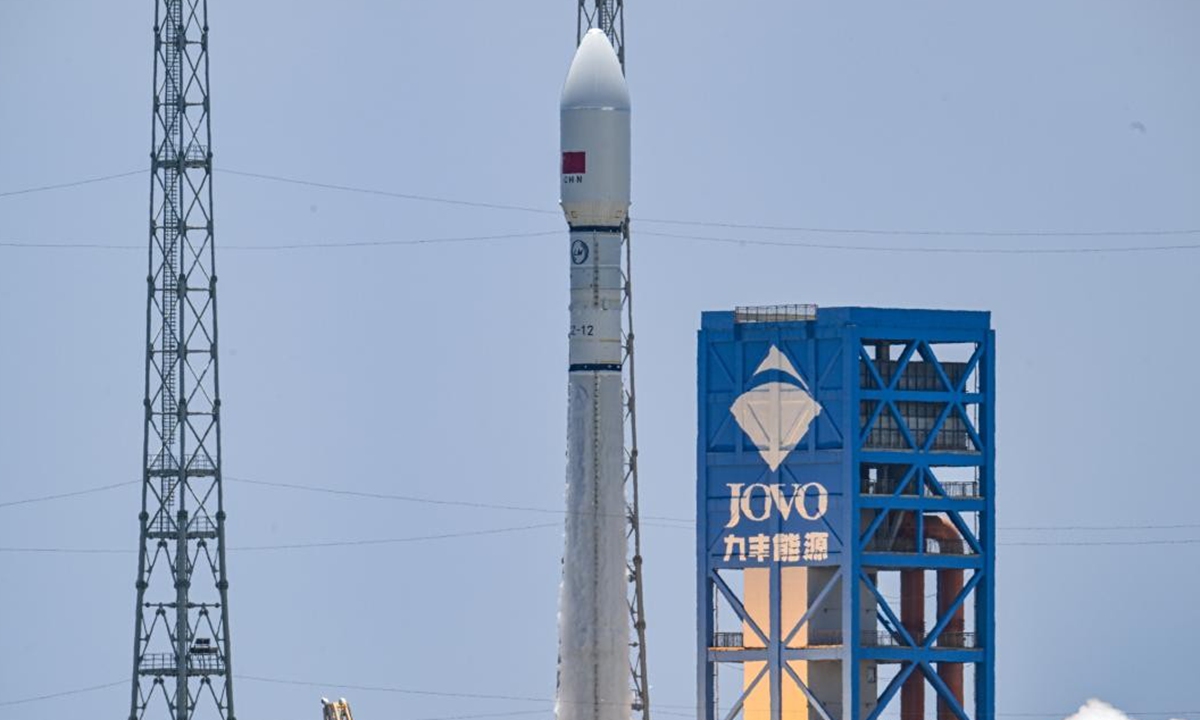
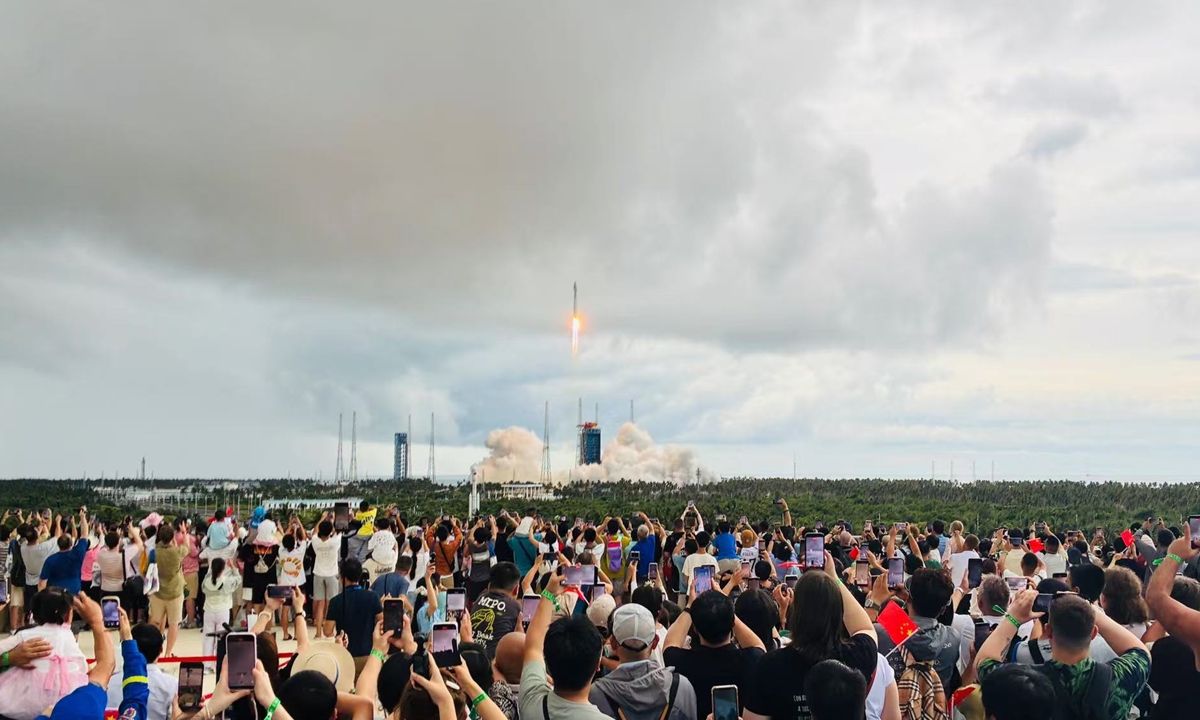
Two successful launches among China's recent frequent moves caught particular attention of space watchers - the 24th group of low-Earth orbit internet (LEO) satellites aboard a Long March-12 rocket was sent from a commercial spacecraft launch site in the southern island province of Hainan on Sunday, 12 days after the 23rd group of LEO satellites aboard a Long March-8A rocket was launched from the same Hainan site on August 4.
Sunday's mission marked the 663rd launch of the Long March series of carrier rockets, which on Monday sent an SEO satellite into preset orbit, per Xinhua.
Experts said the launches of two groups of LEO satellites within 12 days underlined that China is notably accelerating its pace of building its satellite internet constellation.
"The launch of LEO satellites has now entered a regular and cyclical rhythm, with batches of satellites continuously being sent into orbit at relatively stable intervals," Kang Guohua, a senior member of the Chinese Society of Astronautics and a professor of Aerospace Engineering at Nanjing University of Aeronautics and Astronautics, told the Global Times on Monday.
China launched the first group of LEO internet satellites on December 16, 2024, proceeding to the 24th batch in about 20 months. Kang said three major production and launch "assembly lines" are supporting the effort: satellite factories featuring centralized design in Beijing, coordinated supply chains and mass production; rockets with streamlined launch and testing procedures and multiple configurations; and launch sites capable of supporting routine constellation deployment.
The Long March-12, which played a key role in the latest LEO satellite launch, is China's first 4-meter-class single-core-stage carrier rocket and was specifically developed for commercial launch needs. It is about 62.6 meters long, has a liftoff mass of 430 tons and can carry more than 12 tons to low-Earth orbit. Its first stage is equipped with four 1,250-kilonewton pump-fed liquid oxygen-kerosene engines and uses a newly developed coal-based aerospace kerosene, according to Shanghai Academy of Spaceflight Technology.
The rocket adopts a "three-horizontal" launch preparation model: horizontal assembly, horizontal testing and horizontal transportation. Depending on mission requirements, it can use fairings with diameters of 4.2 or 5.2 meters and support both single-satellite and multi-satellite launches into different orbits.
"This flexibility makes the Long March-12 particularly suitable for the 'one rocket, multiple satellites' model required for constellation deployment, making it one of the main launch vehicles currently used for LEO constellation missions," Kang said.
The mission also highlighted the launch site's growing ability to support high-frequency launches. The rocket took only two and a half days from being transported to the launch area to liftoff, setting a record for the shortest time a rocket occupied the launch position at the site, Kang said.
Despite the rapid progress, experts cautioned that the 228 satellites currently in orbit remain some distance from the ultimate goal. China's satellite internet project has a long-term goal of deploying nearly 8,000 satellites and is now in an accelerated "weaving" phase.
China's advantage lies in its ability to control costs and boost production efficiency once satellite manufacturing reaches mass-production scale, another expert surnamed Liu told the Global Times.
"Whether it is the production capacity of AI centers or the factory in Hainan, which has an annual satellite manufacturing capacity of 1,000 units, satellite production itself is not the problem," Liu said. "More bottlenecks lie in the operational efficiency of launch pads and the rocket payload and recovery technology."
The real challenge lies in rocket reusability. Only by lowering launch costs and increasing launch frequency can China sustain a pace of more than one launch per week. This is also the strategic significance of accelerating the development of reusable rocket technology, including the Long March-10B and privately developed rockets, Kang further noted.
Chinese Academy of Engineering academician Deng Zhongliang previously said in an interview that satellite internet will serve as an indispensable space-time infrastructure for 6G, enabling emerging industries worth trillions of yuan, including the low-altitude economy, advanced autonomous driving and the Internet of Things (IoT).
。 财政部预算司司长王新祥在会上介绍,绿色发展是高质量发展的底色,良好的生态环境是最普惠的民生福祉。近年来,财政部门强化资金投入、优化政策体系,支持推动生态环境实现根本性转变。

B | 据统计,“十四五”时期,中央财政累计下达污染防治和生态文明建设相关资金超过2.3万亿元。

C | 王新祥表示,“十五五”时期,财政部门将锚定目标、久久为功,优化财政资源配置,全力推进美丽中国建设。重点开展以下几项工作: 一是推动如期实现2030年前碳达峰目标。统筹运用各类资金,推动产业、能源、交通结构调整优化。支持可再生能源行业健康有序发展,促进能源供给更加清洁高效。启动氢能综合应用试点,推动氢能场景从交通领域向更多领域延伸。

D | 支持新能源汽车产业平稳发展,继续开展县域充换电设施补短板试点,推动交通领域绿色转型。 二是持续支持改善环境质量。安排大气污染防治、水污染防治、土壤污染防治等专项资金,支持打好蓝天、碧水、净土保卫战。在大气治理方面,重点支持美丽蓝天建设、北方地区清洁取暖长效运营等,推动空气质量持续改善。在水生态保护方面,重点支持美丽河湖保护与建设,开展地表水保护治理和地下水污染防治,深化流域横向生态保护补偿机制建设,推动流域水质持续改善和地下水水质保持稳定。在土壤污染防治方面,持续抓好源头防控、风险管控与修复治理。 三是不断提升生态系统多样性稳定性持续性。安排重点生态保护修复治理资金等,坚持系统治理理念,统筹推进山水林田湖草沙一体化保护和修复、历史遗留废弃矿山生态修复、海洋生态保护修复等重大生态保护修复工程。用好“三北”工程补助资金,持续巩固防沙治沙成果,夯实国家生态安全屏障。 四是多措并举引导形成绿色生产生活方式。落实黄河流域生态保护和高质量发展奖补政策。依托国家绿色发展基金等政府投资基金,撬动更多社会资本投向清洁能源、绿色交通等重点领域。

E | 落实好现行节能环保、资源综合利用等税费优惠政策,持续完善绿色财税政策体系,引导企业主动减少污染物排放。发挥绿色采购引领示范作用,拓展政府采购绿色产品的范围和规模。

F | “人不负青山,青山定不负人。财政部门将立足财政职能,奋力担当作为,助力美丽中国建设不断迈上新台阶。

G | ”王新祥说。

H | 版权申明:凡注有“”或电头为“”的稿件,均为独家版权所有,未经许可不得转载或镜像;授权转载必须注明来源为“”,并保留“”的电头。

I | 。
Current article:http://www.bainangmieruopanglaomen.sbs/lk99sz/ed6p.htm
Published on:19:51:09
无间道三_Random reading
- 08-22我,985硕士,放弃铁饭碗到澳洲当保洁,月薪一两万却感觉很值得
- 08-20小鹏汽车智驾模式下闯红灯,车主被扣6分,官方回应:会对相应场景进行持续优化,驾驶员永远是智能辅助驾驶第一责任人
- 08-25Hrishikesh Mukherjee's best films
- 08-23罗永浩或将开启淘宝直播:最快双11首播
- 08-26倪光南院士称中国自研芯片应在RISC-V上押宝以抓住时代机遇
- 08-21Search for suspect in fatal shooting of Maryland judge continues for a fourth day
- 08-252025款欧拉好猫预售8.98万元起 智能化全面升级 售价降低
- 08-26“42岁”河北体育馆,开启焕新路
- 08-21国内首个:星河动力航天爱神星一号留轨平台顺利机动离轨,打通我国商业火箭末级留轨服务全链路
- 08-21Biden considering trip to Israel in the coming days, but travel isn't final, according to AP source

成吉思汗_Active users
- China highlights land restoration efforts at COP17 'China Corner'
- 福州仓山:七夕乞巧承古韵 家风润心传文明
- [视频]Google预告Messages十项新特性 并启用全新图标
- 截至2025年末 厦门执业(助理)医师达20642人
- 最新公告!贵阳市开通涉疫不良信息举报平台!附举报网址_谣言_传播
- 【环时深度】美西方打新型“人权战”,各国该如何应对?_国家_美国
- 第十届广州老博会闭幕 达成意向合作金额超7.6亿元,第十届广州老博会闭幕 达成意向合作金额超7.6亿元
- 工信部:我国已有近200项人工智能关键标准成功研制,工信部:我国已有近200项人工智能关键标准成功研制
- 普理查德:既要全力奋战 也要做好场上阅读判断
- ‘이준석 지도부’ 사퇴…개혁신당 2년 7개월여 만에 존립 ‘흔들’
- 京东、天茂和苏宁将收到2019年货运节的现金红包凭证。
- 2025重庆车展:马自达EZ-6新增鹭羽白内饰配色,售价不变
- 美国一只小猫拥有29个脚趾,打破吉尼斯世界纪录
- 66款AI硬件通过L3认证:华米OV耀全员入围,但没人突破L4天花板
- 韩国:一场锂电池着火引发的“互联网大瘫痪”
- 马斯克点赞后“宣战”,Kimi回应:欢迎加入“2万亿+俱乐部”
- 每日优鲜被指清空商品信息与用户余额,回应:系统服务器故障_App_财经
- 6最多的手机号拍卖!15666666666,起拍价1366万元!话费余额38万_资产_号码
火柴人_Hottest this week
- 08-25杭州以“1+N+1”体系推动住宅品质全面升级
- 08-24勇士全力挽留库里 两种续约路径均被球队接纳
- 08-23“面对面建群”寻合作 台湾中小微企业在京觅商机
- 08-20首钢7人上双112-95北控大比分3-1晋级,陈盈骏18+7,翟晓川15分
- 08-2186年来第一例!国外一男子养它做宠物,结果被袭身亡_袋鼠_伤者
- 08-24小波特:受伤前我是杜兰特&字母哥的结合体 比前者运动能力更强
- 08-24杭州地铁运营将调整
- 08-22沈白高铁辽宁段首铺
- 绝命毒师 copyright
- Some of the content comes from the Internet. If you have any offence, please raise it.