wto姐妹会
长鑫科技网上中签率约 0.4714%;Kimi 暂停 C 端新用户订阅 | 蓝媒GPT_我的网站

一 |
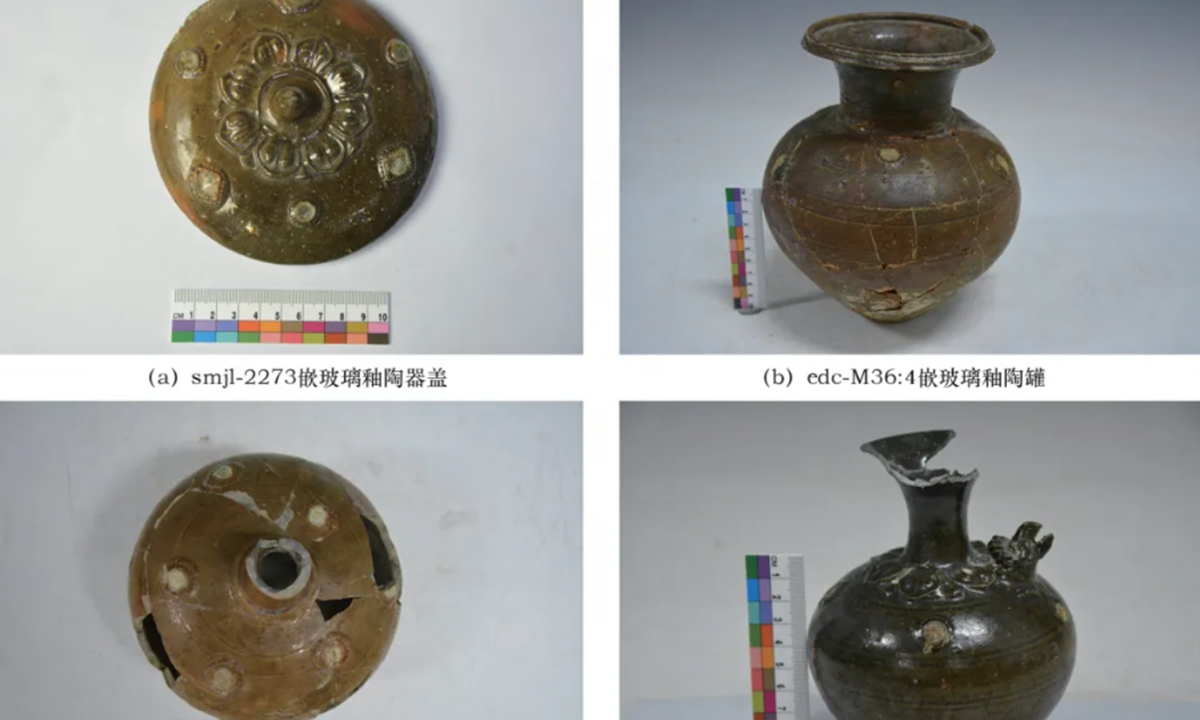
Samples of glazed pottery embedded with glass excavated from Northern Wei tombs in Pingcheng Photo: Courtesy of Shanxi Provincial Institute of ArchaeologyRare glass-inlaid glazed pottery artifacts unearthed from ancient tombs in Northwest China's Shanxi Province have provided new evidence of extensive cultural and trade exchanges between ancient China and other regions more than 1,500 years ago, according to a press release that the Shanxi Provincial Institute of Archaeology sent to the Global Times on Tuesday.
Systematic analysis conducted by the institute of pottery wares dating back to the Pingcheng period of the Northern Wei Dynasty (386-534) has identified distinct foreign cultural and technological elements embedded in the craftsmanship and material composition of the unique artifacts, shedding fresh light on ancient Eurasian cultural integration.
Established by the Tuoba Xianbei ethnic group, the Northern Wei Dynasty designated Pingcheng, present-day Datong city in Shanxi Province, as its capital from 398 to 494. For nearly a century, the city served as a pivotal multicultural hub where Xianbei nomadic culture, Central Plains Han culture and diverse Western Regions civilizations converged and interacted, according to a report on Chinanews.com.cn.
Archaeological excavations at multiple tomb clusters in Pingcheng, including the Dongxin Northern Wei cemetery and the Qilicun cemetery, have yielded a total of eight pieces of glass-inlaid glazed pottery. Though far fewer in number compared with common glazed pottery figurines and painted glazed wares, these artifacts feature an extremely rare inlay technique unseen elsewhere in the developmental history of Chinese ceramics, according to the press release.
Given the exceptional rarity and good preservation of the relics, researchers selected four representative pieces for comprehensive laboratory testing and material analysis. The results show that the glass inlays are primarily soda-alumina glass, most likely produced by remelting trade beads from the Indian Ocean and Pacific regions, a key commodity in ancient maritime and overland trade networks.
The findings confirm that Pingcheng maintained frequent cross-border trade and cultural communication during the Northern Wei era, with access to glass raw materials sourced from diverse overseas regions. The varied compositional characteristics of the inlaid glass provide crucial clues for studying ancient glass-making technologies, raw material circulation and long-distance trade routes in ancient East Asia, the press release noted.
Beyond material composition, the artifacts also embody prominent cross-cultural innovation in design. Their decorative motifs draw heavily on gem-encrusted gold and silver wares of the Sasanian Persian Empire, while integrating artistic elements from other Eurasian regions. The blended design styles reflect the era's prevailing trend of multicultural fusion and creative assimilation of foreign civilizations.
Archaeologists noted that the glass-inlaid glazed pottery represents an innovative technological achievement crafted by Northern Wei artisans who absorbed and refined foreign techniques and aesthetics. The distinctive craftsmanship and stylistic features of these wares exerted a far-reaching influence on ceramic production in surrounding regions and subsequent dynasties, marking a vital chapter in the evolution of ancient Chinese ceramic art.
The research underscores that ancient China's northern borderland was not an isolated cultural enclave, but an active node in Eurasian cultural and trade exchanges, where foreign elements were localized and innovated to form unique regional civilizational achievements, archaeologists from the Shanxi Provincial Institute of Archaeology said.
。

二 | 长鑫科技 IPO 中签号出炉:网上中签率约 0.4714%
长鑫科技昨天公布科创板首次公开发行网上中签结果,共产生 7702207 个中签号码,每个号码可认购 500 股 A 股股票。发行人与联席主承销商已于 7 月 17 日完成摇号,过程及结果经上海市东方公证处公证。本次发行价格为每股 8.66 元,网上发行有效申购户数为 9428778 户,有效申购股数为 8169.20 亿股。

三 | 回拨机制启动后,网上最终发行数量为 385110.35 万股,最终中签率为 0.47141739%。
算力承压,Kimi 暂停 C 端新用户订阅
Kimi 于 7 月 19 日发布公告称,因 K3 发布后用户请求量在 48 小时内大幅超出预期,并逼近现有集群承载极限,公司即日起暂停 C 端新用户订阅。Kimi 表示,现有算力将优先用于保障已订阅用户的使用体验,同时继续推进算力扩容;待新算力陆续到位后,将逐步开放更多订阅名额,直至恢复正常订阅。
马斯克称 2 万亿参数模型或超越 Kimi,下周完成初始训练
埃隆·马斯克日前发文表示,其团队正在训练一款参数规模为 2 万亿的模型,综合能力可能超过 Kimi,同时将尽量接近 Grok 4.5 的速度和 Token 效率。

四 |
马斯克表示,这款 2 万亿参数模型「在各方面」都优于 1.5 万亿参数的模型,预计于下周完成初始训练。此前,马斯克曾评价 Grok 4.5 在速度和成本方面「可能是第一」。

五 | 相关帖文称,Grok 4.5 的参数规模为 1.5 万亿,而 Kimi K3 为 2.8 万亿,但后者每项任务的成本约为前者的 3 倍。

六 |
商汤 SenseNova U1 Pro 发布,支持原生 8K 与长程编辑
商汤科技在 WAIC 2026 发布 SenseNova U1 Pro 预览版,把图文理解、生成、检查和修正放入同一个长程循环,面向商业信息图、演示文稿、电商视觉、科学图解和影视分镜等交付任务。

七 |
最高支持原生 8K 输出,针对超宽、超长和高信息密度画面保留文字、线条、图标和版式关系;
支持数十轮 Agentic Generation Loop,可同步修改整体风格和局部文本;
底层采用 NEO-unify 统一架构,把语言和视觉表征放在同一基座上,并与商汤开源的 SenseNova-Vision 通用视觉能力结合。目前预览版采用邀请测试,将随推理资源扩容逐步开放。正式版计划于今年 8 月上线。
荣耀 Robot Phone 开启预约,支持跨应用任务与云台互动
7 月 18 日,荣耀 CEO 李健在 2026 世界人工智能大会(WAIC 2026)上表示,人工智能将从工具属性进一步发展为具备感知、推理、执行和反馈能力的伙伴型智能系统。同日,荣耀 Robot Phone 开启全渠道预约,推出「月影灰」和「星轨银」两款配色。

八 | 荣耀表示,Robot Phone 搭载其下一代终端操作系统 Agentic OS,支持理解复杂指令,并自动完成跨应用的连续任务。

九 | 产品还能够识别用户动作,通过转动云台进行互动回应,并根据声音做出舞蹈动作。荣耀称,这是其对「伙伴型类人生命体」以及具身交互方向的探索落地,也标志着产品从「智能体手机」向「机器人手机」形态延伸。
面壁开源 MiniCPM-Robot 操作与跟踪模型
昨天, 面壁智能与 OpenBMB 在 WAIC 2026 发布并开源 MiniCPM-Robot 系列,包括面向机器人操作的 MiniCPM-RobotManip,以及与南京大学合作开发、面向移动机器人跟踪导航的 MiniCPM-RobotTrack。

十 |
MiniCPM-RobotManip 为 1.5B 参数通用 VLA 模型,支持 1 分钟上下文记忆。在包含 60 帧历史观测的操作任务中,流式推理将单步计算量从重新计算时的 125 TFLOPs 降至 3.3 TFLOPs;在 H100、BF16 精度下,单决策步延迟为 120ms。
阿里云百炼上线 HappyOyster 1.0 世界模型
阿里云百炼上线开放式世界模型 HappyOyster 1.0,面向企业和开发者开启灰测。

十一 | 用户可输入一句话或一张图生成可以实时控制和探索的数字世界,模型会根据角色动作与用户指令预测环境的后续变化。
世界探索 Adventure 模式可持续 1 分钟以上的主体动作和环境交互,支持音画同步生成;
实时导演 Directing 模式允许用文字指令调整镜头、角色和剧情,并随时暂停、改写或回溯;
产品提供 Android、iOS 和 Web 三端 SDK;服务端 Open API 管理世界状态,客户端 SDK 封装 RTC 连接、视频渲染和实时交互,体验结束后可导出视频。
Lanmeih/今日话题
你中签长鑫了吗?
咱们评论区聊聊~。
Current article:http://www.bainangmieruopanglaomen.sbs/list_k1a/3px.html
Published on:20:02:40


