
绿光森林
走在乡间小路上丨这里有个“围裙村”_我的网站

A |
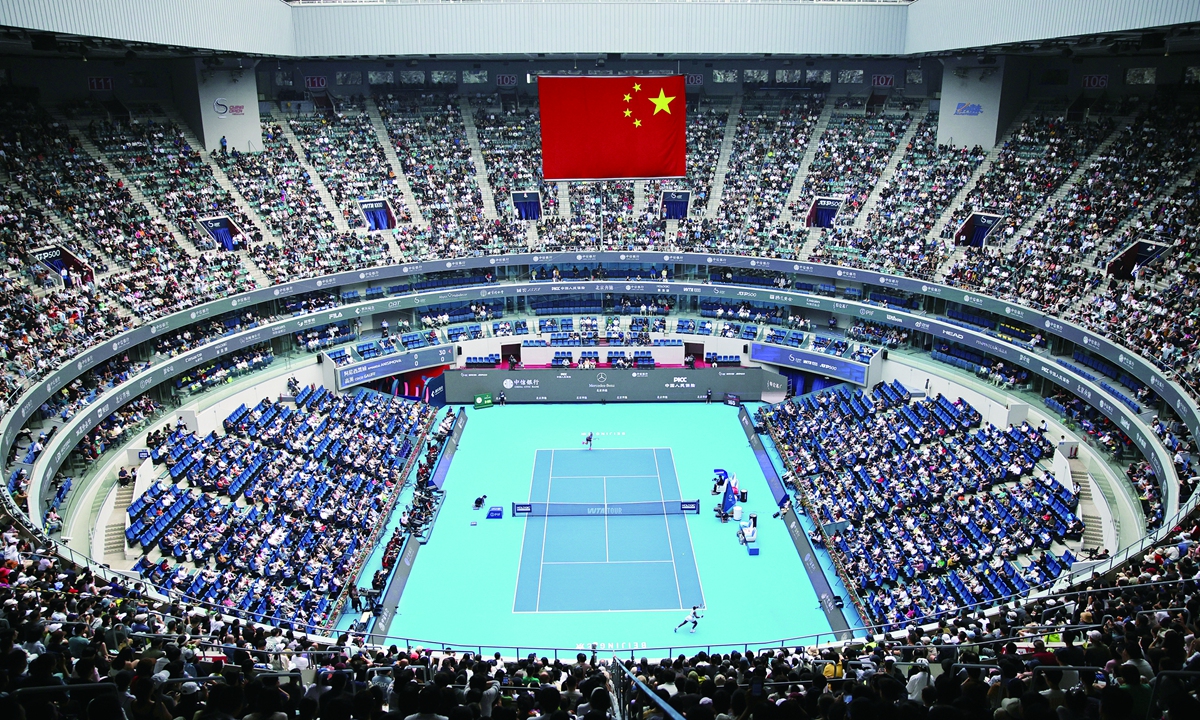
As international tennis tournaments multiply across China this autumn, organizers are increasingly looking beyond the court, seeking to turn a trip to a tournament into a broader travel experience.
The 2026 Chinese tennis season, starting in September, will bring a series of international events to cities including Chengdu, Hangzhou and Suzhou besides flagship events in Beijing and Shanghai.
The growing concentration of tournaments is giving Chinese cities a chance to connect sporting events with local consumption, cultural activities and tourism.
Shanghai offers perhaps the clearest example of how that strategy is developing.
In 2025, the Shanghai Masters attracted more than 250,000 spectators, with about 10 percent coming from overseas and 60 percent from outside Shanghai, according to the Shanghai municipal government. The tournament also generated more than 100 million yuan ($14.8 million) in ticket revenue.
The figures have encouraged organizers and city authorities to think beyond the traditional model of selling a ticket to a tennis match.
During this year's Shanghai Masters, ticket packages will include options combining matches with direct transportation, family experiences and visits to other Shanghai attractions, the organizers have announced.
The approach fits into Shanghai's broader effort to use major sporting events to attract international visitors.
The experience in Shanghai suggests that the relationship between tennis and tourism can work in both directions: a tournament brings people to a city, while the city gives spectators reasons to stay longer and spend money beyond the stadium.
For host cities, making tennis more than a sporting event can also serve as a platform for destination marketing, particularly when the event attracts an international audience.
Sports tourism can offer cities something that conventional sightseeing does not, according to tennis commentator Chen Chi.
"Tennis events can activate destinations and build recognizable identities," Chen told the Global Times. "The international player base and global fan following of tennis give host cities an audience well beyond their local audiences, which is widely seen at the Grand Slam events."
The challenge now is to make those visitors stay longer and explore more of the host city. That is where the "ticket plus" model comes in.
Rather than simply asking visitors to buy a match ticket, organizers are increasingly packaging the tournament with hotels, transportation, attractions and other experiences.

Culture matters
In Suzhou, East China's Jiangsu Province, organizers of the WTA 125 Suzhou Open are trying to connect the tournament with the city's existing cultural resources.
Zhou Yunsong, tournament director of the Suzhou Open, said the timing gives spectators an opportunity to combine a tennis trip with a holiday as it partially overlaps with the annual National Day holidays.
"For our spectators, this is a rare opportunity to combine watching tennis with travel. For domestic tennis fans, they don't have to take time off work as they normally would," Zhou told the Global Times.
The tournament venue, the Yangcheng Lake International Tennis Center, is located near several cultural and commercial areas in Suzhou.
The event has also introduced a hotel-and-tennis package, while organizers have arranged cultural experiences for players, including visits to Suzhou's gardens and local cultural venues.
"To give players an immersive experience of Suzhou's charm, we have planned a range of cultural activities, including visits to the Suzhou Museum, tasting authentic Suzhou cuisine, listening to Kunqu Opera, trying on traditional Chinese qipao and visiting embroidery workshops," Zhou noted.
Zhou sees a broader change in the way people plan trips.
"Traveling to sporting events is becoming a choice for more and more people," he said. "In the past, tourism was about sightseeing - going to a destination, taking photos and checking in. Now, especially among younger generations, people are more inclined to take themed trips."
The idea, he said, is to use the tournament as the starting point for a much wider city experience.
"We hope Suzhou can, with the professional tournament at its core, connect all of Suzhou's tourism resources, including its food, gardens, water towns and shopping, so that visitors can travel around the city for the sake of one match."
Players as ambassadors
For international tennis, this model has another potential advantage: The players themselves can become part of a city's tourism promotion.
Beijing, for instance, is bringing the players themselves into the tourism story. Li Xuhua, general manager of the China Open, said the tournament plans to give players more opportunities to experience the city.
Current world No.1 Jannik Sinner is among the players who are invited to participate in a hutong (traditional alleyway) tour during his stay in Beijing, Li told the Global Times.
The China Open is also expanding its off-site activities this year.
Li said the tournament will work with the local government to establish more match-watching venues in major commercial areas, allowing people to experience the tournament outside the main tennis center.
"The information from the tennis court can go out and reach people around the city," Li said.
For organizers such as Li, the goal is to make the tournament a broader part of the city's cultural and public life.
"We want this rare tennis carnival to be richer and more colorful, and to give fans more time to experience the appeal of tennis," Li said.
The emerging model is still at an early stage as different event organizers are exploring their own strategies. But the direction is becoming clearer: Tournaments are being used not only to fill seats in stadiums, but also to promote cities as travel destinations.
。 缝纫机的嗒嗒声从一座座厂房里涌出来,填满了石家庄晋州市留村的每一条街巷。8月17日,记者走进这个村庄时,扑面而来的不是庄稼的气息,而是鳞次栉比的家纺店铺、远道而来洽谈订单的各地客商。这个华北平原上的普通村庄,正用一条小小的围裙,撬开全国各地的市场。
位于晋州市留村的佳绮利服饰有限公司展出的围裙。长城网·冀云客户端记者 马静 摄走进留村围裙产业龙头企业——佳绮利服饰有限公司,展厅内几百款围裙琳琅满目。PU防水款、棉质透气款、新中式国风款……从单一功能款式,逐步实现时装化、场景化升级,围裙的迭代升级就浓缩在这间展厅里。“我们是集设计、生产、销售为一体的服装企业,1993年成立,2002年转型做围裙,这些年就专注把围裙做好、做精。”佳绮利服饰有限公司总经理张利英说,“我们带动了本地以及周边县(市、区)大量闲散劳动力,为晋州市灵活就业工作发挥了积极示范带动作用。”缝制车间里,裁剪好的布料在缝纫机针脚间飞速流转。

B | 女工王艳芝笑着说:“我就是留村的,在家门口干活,一个月三四千块钱,不耽误接送孩子、照顾老人,比出去打工强。”老员工吴满速从2016年就来这里上班了:“以前自己干小吃生意,顾不上家里。

C | 现在出门几分钟就能到公司上班,工作踏实、收入稳定,还能照顾家里,很满足。”晋州市围裙产业累计带动周边2万余名群众稳定就业,家门口的缝纫机,缝出了稳稳的幸福。留村的围裙产业源自该村做雨衣雨披的传统,转型做围裙之初,村内企业多是零散小作坊。

D | 在村“两委”引导下,围裙企业逐步形成产业集聚,还吸引了其他城市的家纺企业落户。如今,留村围裙的销售渠道从线下扩展到淘宝、抖音、快手等线上电商平台,还做起了直播带货业务。通过“线上+线下、国内+国外”的营销模式,留村围裙畅销全国,远销海外。

E |
留村围裙电商直播间。长城网·冀云客户端记者 张超 摄缝纫机声渐远,街道两旁的家纺店铺又映入眼帘,一家挨着一家。留村第一书记关英波介绍:“目前村内拥有60家专业生产企业,80家电商经营主体,形成产业集群。

F | ”自2015年起,·晋州围裙展销会每年在留村举办,至今已连续举办十二届,成为展示晋州特色产业、推动产销对接、促进乡村振兴的“金字招牌”。
晋州市留村航拍。长城网·冀云客户端记者 张超 摄谈及未来,关英波思路清晰:“我们要推动产品创新,向时尚化、功能化升级,做大产业集群,完善全产业链,擦亮‘围裙之乡’名片。同时紧扣‘智改数转’和‘共享智造’,推进设备共享、工序协同,让‘晋州造·世界品’成为高品质代名词。”从华北村庄到全国市场再到出口海外,一条小围裙串起了860户人家的生计,也织出了8亿元的产业版图。策划:周毅玲文字:马静拍摄:张超 马静制作:马静鸣谢:晋州市委宣传部 晋州市融媒体中心。
Current article:http://www.bainangmieruopanglaomen.sbs/dym/ig2.xlsx
Published on:02:22:04


1
[속보] 국토장관 "용산공원 관련 서울시와 의견접근 안되고 있어"2
詹姆斯造访耐克总部!当众解释加盟76人 现场被球迷围得水泄不通3
上海冀“十五五”期间新增认定跨国公司地区总部数量逾300家,上海冀“十五五”期间新增认定跨国公司地区总部数量逾300家4
我们的三星SSD崩了 中招的人还不少5
Photos: Saif Ali Khan and Karisma Kapoor Visit Deol Residence6
德国股市上涨,截至收盘DAX 30上涨2.40%_股票_指数7
拜顿M字节电动汽车CES 2019现场照片:前排最宽的中央控制屏幕8
《红色沙漠:增强版》游戏公布:增加剧情过场动画和 5 种语音,现有玩家可免费更新9
倒计时2天丨吉南辽北蒙东六市深化合作高质量协同发展第三届会议将在我市召开10
7月中国全社会用电量再创新高 专家析拉动因素,7月中国全社会用电量再创新高 专家析拉动因素11
水利部迅即部署西藏吉隆泥石流灾害应急处置工作12
《香港文学》刊行500期扎根香港面向世界13
为什么人人都爱 Zork?《The Duskbloods》中最古怪的角色,也是宫崎英高的最爱14
英伟达确定在Rubin中使用M9材料,A股谁能受益?| 1022 张博划重点15
US says Iranian drones breach sanctions
- 随机推荐
1
中航西飞:上半年净利润4.9亿元 同比下降28.91%2
微软Edge移动团队招聘软件工程师:中国北京办公区3
已确认!当场击毙!4
读秒绝杀!这支国足赢了5
哈利伯顿自曝选秀夜曾致电太阳:想和布克打球6
'사무직 노조 탈퇴 늘어'…SK하닉, 성과급 놓고 '미묘한 긴장감'7
如何应对低温、雨雪、冰冻天气?8
签了!比尔2年1320万!好家伙,头真铁啊.....9
四冠射手克莱-汤普森与独行侠达成买断 加盟热火10
2026成都车展 自主强势占位!比亚迪连续三年“包馆”、“暗藏”颠覆性技术 长城半馆坐镇11
英特尔临时首席执行官:过去几年仅限于个人电脑市场,现在发现了更多的机会12
募资额、净利润超长鑫科技!长江存储IPO获受理 受益股曝光13
村上宗隆、技あり二塁打含む2安打 OP戦出場3戦目 10打席4三振14
主动投案,贵州威宁自治县第三中学退休教师肖宁接受监察调查15
财政部:消“洼地”、划“红线”、校“标尺”,持续助力优化市场环境