
一 | Colombo, Oct 20 (UNI) Amid growing criticism, Sri Lankan President Ranil Wickremesinghe has justified a hike in income tax for both corporates and individuals, saying it was for the greater good of the country and critical to garner much needed financial support from the international community.
In an address to the nation, the President said the International Monetary Fund (IMF) with which the government has signed a Staff Level Agreement for a $2.9 billion four-year financial support, advised the need for a surplus in Sri Lanka’s primary budget, the Daily FT reported on Thursday.
“It was agreed to since the country needs the support of the IMF,” he was quoted him as saying.
“It was also decided to increase the country’s income from 8.5 per cent to 14.5 per cent of the GDP. However, it is a difficult task to accomplish immediately, it is envisaged to achieve this by 2026.
"Initially, a decision had to be taken on the manner in which the income is to be increased. Money was printed due to the decrease in income. During the past two years, Rs. 2,300 billion has been printed, resulting in inflation rising to 70-75 per cent and even more in respect of food inflation," he said.
Wickremesinghe said these increases need to be controlled, while securing income. Therefore, during the discussions with the IMF a new tax system was proposed. The IMF informed that even the export industries would be required to pay taxes.
The IMF pointed out that in countries with an export economy, the related industries were liable for tax. The IMF also upheld that Sri Lanka’s primary export economy is based on the plantation industry.
During British rule, taxes were charged from every plantation sector, including tea, coconut and rubber. Therefore, if the country has to move towards that goal, taxes will have to be paid. The export sector has now questioned this aspect and the related concerns are to be submitted to the IMF.
Referring to the issue of higher personal income taxation, the President said the majority of tax revenue was through indirect taxation. The majority of the country’s citizens, even those below the poverty line, had no choice but to pay indirect taxes, the President said.
The direct tax revenue was 20 per cent and 80 per cent has been derived from indirect taxes.
The IMF had reservations in this regard and said the amount of tax obtained through direct taxes should exceed 20 per cent. The IMF noted that otherwise this would not be successful and ordinary citizens would need to pay taxes, the President said.
Therefore, the Treasury and the IMF discussed the possibility of limiting the taxation from those who have an income of Rs. 200,000, which did not materialise. Eventually, this resulted in the decision to levy income tax on people earning over 100,000. This has become a vital concern amongst citizens.
But without this tax system, the desired goal will not be achieved. The agreed goal is to achieve 14.5-15 per cent of Gross Domestic Product (GDP) revenue by 2026, Wickremesinghe said.
If Sri Lanka withdraws from this programme, IMF assistance will not be received. Without IMF certification, the support of institutions such as the World Bank, Asian Development Bank, and the countries that have supported financially will not be forthcoming. Then, Sri Lanka will be back to the era of queues, he warned.
In his address, Wickremesinghe also said the Government was ready to implement prudent economic management after successful debt restructuring.
He noted that it was not possible to strengthen the economy without increasing the revenue of the country, which will compel him to reluctantly make tough decisions in order to rebuild the nation.
The President pointed out how in November 2019, the country’s taxes were drastically reduced, reducing the government revenue to 8.5 per cent. This was when the IMF set aside the agreements with Colombo and declared that it was unable to provide the agreed assistance.
"That year the government lost approximately Rs. 600-700 billion as revenue. Simultaneously, the country had to face the Covid-19 pandemic. These issues are the main factors that led to the collapse of Sri Lanka’s economy.
"The country at this juncture is facing a difficult period. Expectedly tough decisions have to be taken during these difficult times. I undertook this challenge when no one else was willing to come forward."
UNI MR。 拼多多二季度净利润下滑12%。

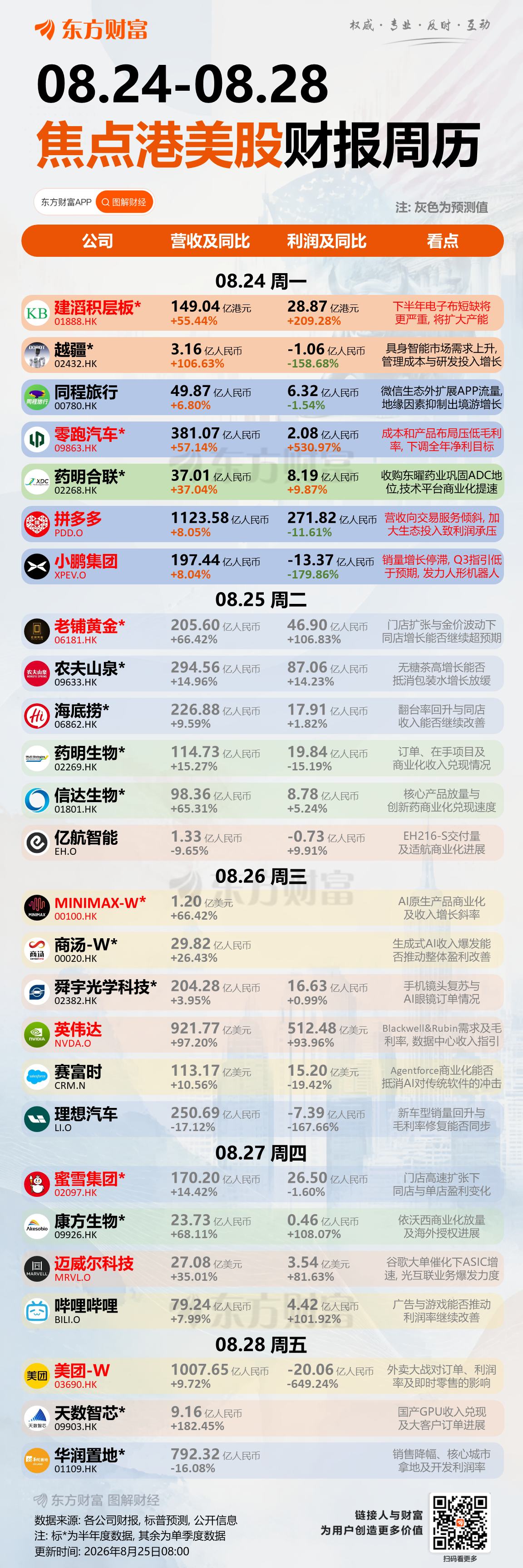
二 | 8月24日,拼多多(Nasdaq:PDD)发布二季度财报,财报显示,二季度总营收达到1124亿元,同比增长8%;净利润为272亿元,同比下降12%,非国际会计准则下(Non-GAAP)净利润为285亿元,较2025年同期的327亿元下降13%。 拼多多在财报中解释称,利润下滑主要由于平台生态持续加码投入,叠加海外非经营项目亏损影响。 财报显示,二季度拼多多营业成本为480亿元,同比增长约5%;销售及营销、一般及行政、研发三项运营费用合计约366亿元,同比增长13%。 其中,销售与营销费用为297亿元,同比增长约9%;研发费用46亿元,同比增长约27%;一般及行政费用23亿元,同比增长约53%。研发和治理相关投入增幅较为明显,反映公司仍在持续加强平台能力、技术投入以及合规建设。 在财报后的电话会议中,拼多多管理层回应了几个核心问题。

三 | 拼多多集团联席董事长兼联席CEO(首席执行官)赵佳臻表示,品牌自营业务是公司长期供应链投资的重要延伸,希望与有能力、有意愿的制造企业建立深度产品共创,发挥平台在市场洞察和全球渠道上的优势,为产业链带来增量价值。推进节奏上,初期将有选择地在平台供应链具备独特优势的核心品类上,与深耕制造业的企业合作,参与产品研发、质量标准制定和市场验证。

四 | 赵佳臻称,该业务培育磨合周期较长,启动时间超预期,但这是明确的长期战略方向,拼多多会保持耐心并对前景有信心。 此前8月10日,拼多多宣布上线“最快明天达”核心入口,品类覆盖水果生鲜、日用百货等。此前拼多多并未设置相关一级入口,仅通过算法在商品页或搜索结果页动态展示“明天达”标识。

五 | 此次将其提升至首页核心导航位,被视为拼多多在时效履约能力上的重要升级。 谈到外界关注的即时零售,赵佳臻表示,其与平台核心电商、买菜业务满足消费者不同场景需求。

六 | 从现阶段业务基础来看,两者底层链路和模式差异较大,能够形成的协同相对有限。拼多多将集中资源于自身有积累、能创造独特价值的领域,持续夯实供应链。 而对于Temu等全球化业务,拼多多集团联席董事长兼联席CEO陈磊表示,今年以来全球多个市场的监管政策和合规要求出现较大变化,给公司全球化业务带来新的挑战。他表示,拼多多正在持续加强合规能力建设,并根据不同市场的监管要求调整和完善平台治理规则。 陈磊同时表示,公司目前处于转型发展阶段,后续仍将继续投入供应链建设和平台治理。他认为,全球贸易环境快速变化,对平台的合规能力、供应链体系以及长期运营能力提出了更高要求。 截至8月24日收盘,拼多多跌1.48%,报收87.07美元。 东财图解·加点干货
 (文章来源:澎湃新闻)。
Current article:http://www.bainangmieruopanglaomen.sbs/b7d8m/fpr.html
Published on:17:09:43


 悲伤的一天!Newshub宣布关闭 ,政界人士纷纷做出回应
 “男鞋第一股”自救:奥康国际一边收缩,一边跨界
 索尼公司向MWC19发出邀请:2月25日发布了新的超长“鱼屏”飞机。
 公益福彩守护银发!当“银发浪潮”遇上 “广州温度”,变“养老”为“享老”的羊城答卷
 三年不敢去的青甘线,华住会给了我闭眼冲的勇气
 共筑防线 共享机遇——2022年国家网络安全宣传周观察_活动_新华社


